Monday, March 23, 2009

The guys who hold the willy

I like the address. It's bang opposite MIG Cricket Club in Bandra. As the doorbell is rung, and those nervous moments before the door is opened elapse, I steal a glance at the MIG Cricket Club grounds across the road. Ahh...the sight of a lush green cricket field! The sight, that kept us Kendriya Vidyalaya kids glued to the very English 'Bodyline' TV series on DD in the early 90's. We sure were not following a single word of Jardine or Bradman, but cricket action in the sunny Britain fields, we sure were. So yes, I like the view from the doorbell too.

Gate opens, a lanky (by Indian standards) Jaideep escorts me in, introduces, cross-introduces Jatin (Stats editor) and Sreeram (Editor) to me. Jatin is primarily responsible for the numbers on the site, and though he claims he will become a CA someday, Jaideep and Sreeram have their doubts. "He is never going to leave...he will stick around to writing and cricket", claim his maytes. He was a Sachin Tendulkar bhakt till a few years ago, but now just smiles at the mention of this big cover story that rates Rahul Dravid as the Best Indian Test Cricketer of all times!! (Sachin is at No. 4, if you are wondering. And I feel so vindicated...yoo hoo!) Jaideep, a documentary maker, writer and director (he wrote and directed last year's very special 'Hulla') was one of the founding editors of the site (along with Ramki of Cartwheel Creative) and is still a major contributor for the site's topical features. These are the guys, sitting around a Satte-Pe-Satta style huge dining table, laptops perched comfortably, and smiling modestly, who run 'Holding Willey'.

Cricket writing in India, and as far as I know in other countries too, suffers from what could be called 'Radio Commentary Syndrome' - describing what happened, ball-by-ball, on the field. At its lamest, we see 'syndicated' columns by Gavaskar, Shastri and even Javagal Srinath(!) telling us which team should bat first on which ground, or playing petty blame-games post a match/series, and at its most adventurous, we have Harsha Bhogle and Ian Chappell, talking about bigger issues like ICC Politics, or the way we groom the game. But is anybody talking about the game itself? Does anyone realize the analytical potential of sports in general, the romance, nostalgia and perspective any sport deserves? Harsha Bhogle once wrote that it's a loss that so few of our sportsmen could write or express themselves, as these are the guys for whom success and failure in life/job/relations is not some abstract idea - they live and retire with these ideas. I mention this and Jaideep points me to the book review of Akash Chopra's 'Beyond the blues', on Holding Willey.

Sreeram and Jatin call their venture a work of pure 'passion', a word much in misuse now-a-days (did you see that car company calling itself 'passionate about innovation' or something!), but they mean well. See the range and quality of articles (Damith from SL writes about a 130-year school cricket rivalry, while Jonathan from WI lists all-time greatest Carribean cricketers), the collection of supporting caricatures (by Rajnikanth), and you'll know (if you know your cricket well) that much effort has gone into getting those quirks right - Dravid's sweat, Sehwag's head-scarf, and Azhar's upped-collar bring back memories of the days when these trends were still in the making. The look and feel of the site, the wooden logo, and even the site's 12th man - cricket anecdotes etc. are chosen to reward the cricket intellectual and, (un)intentionally, keep out the rediff-message-board groupies.

I suggest cricket, like Cinema and other mass-media has gone down dumbing-down gutter, and Jaideep almost jumps out of his seat to support the motion. "It's strange," he says, "since we believed that if anything could bridge the gap between the so-called masses and classes, then it had to be cricket. It's a game we all know the intricacies of, a game we all love discussing, strategizing and romancing about, and that's what became the seed of this site - a place where you get rewarded for your insights into the game, and not spoon-fed and insulted."

Sreeram and cricket go back, well, may be to his last birth. "I must've turned 8 or 9 when I realized that Cricket is optional....that you could really live and not watch or discuss or analyze it...until then I had never questioned it's religion-like existence in my family." Sreeram is also surprised by the lack of buzz surrounding HW, given the cricket-crazy country we live in.

That makes me wonder, for a fleeting moment during the conversation, whether our 'cricket crazy' tag is also a smart media-manipulation, a kind of 'good donkeys eat bad grass' sermon, turning us into whatever-suits-them-best? And now, when I (again) see the quality of HW's content, and relatively moderate traffic on the site, Jaideep's fears that 'we may love cricket but we hate analyzing it' ring half-true. Though I still think they suffer from more of a visibility rather than conversion problem, the fact remains that HW may find it hard to survive (or rise to its much-deserved stardom) if the real cricket-citizens (a term they coined!) don't turn up soon.

P.S. - Don't forget to check out the story behind the odd name of the site.

*******************

Friday, November 28, 2008

अंताक्षरी

दीवार पे खून के छींटे हैं. ऐसे जैसे सैफ अली खान ने 'रोयाल प्ले' का ऐड किया हो. खून हर तरफ है - लोग मरे हैं. मरना क्या होता है? डैफिनीशन ज़रूरी है. जो ज़मीन पर बिखरे पडे हैं, वो मर गए हैं और जो दीवारों पर लिपटा हुआ है - वो उनका खून है. टीवी ४८ घंटों से बंद नहीं हुआ. टीवी १० सालों से बंद नहीं हुआ. हम देख रहे हैं - बिना आँखें झपकाए कि कुछ होगा. मुद्दा सुलझेगा. या और उलझेगा फिर सुलझेगा. सुलझना क्या होता है? पता नहीं. पर इंतज़ार में सुकून है. इंतज़ार में 'मतलब' है. जीने का. मरना क्या होता है? शाम अच्छी लगती है. कबूतर अच्छे लगते हैं. शाम के आसमान में उडते कबूतरों को देख के लगता है उनमें भी एक मतलब है. ट्र्क तेज़ी से आ के रुकता है - पीछे का ढक्कन तुरंत खुलता है और मिलिट्री वाले उतरते हैं - कबूतर उडते हैं. कैमरा शेक करता है - हम साँस रोके देखते हैं. हौलीवुड की फिल्में याद आती हैं. हैलिकॉप्टर, बुलेट-प्रूफ जैकेट, शेक करते कैमरे, ४५० कमरे, खतरे के अंदर होकर भी बाहर हम. हम में 'स्पिरिट' है. हम फिर से उठ खडे होंगे. जो ज़िंदा हैं, वो. कंडिशन्ज़ एप्लाई.

फोन बजता रहता है. हम चलते रहते हैं. आवाज़ें भी साथ साथ चलती हैं - सिग्नल नहीं टूटता. प्रियंका चोपडा फोन लेकर बिस्तर पे नाच रही है. पीछे से आवाज़ें आ रही हैं. सिग्नल नहीं टूटता. हम ह्स्पताल में हैं. यहाँ दीवारों पे खून नहीं है - पर ज़मीन गंदी है. टिंचर की बदबू में भी प्रधान मंत्री ने नाक नहीं ढका. एक से हाथ मिलाया, दो शब्द भी कहे. देश की 'स्पिरिट' से. रेल्वे स्टेशन दूर नहीं है. वहाँ पानी सस्ता मिलता है (बाहर के मुकाबले) - पर ब्राँड की चॉएस नहीं है. एक ही ब्राँड है - रेल ब्युरोक्रेसी का चुना हुआ. पानी की बोतलें बिखरी पडी हैं. उनमें भी लगता है खून था. यहाँ की गंदगी खटकती नहीं. रेल्वे स्टेशन पे खून 'आऊट ऑफ कैरेक्टर' नहीं लगता. बोतलें पाँव से चिपक रही हैं. यहाँ भी कहीं कहीं कबूतर हैं - रोशनदानों से झाँकते हुए. (इसलिए) बेमतलब हैं.

टीवी अभी भी चल रहा है. हम रुके हुए हैं. फिल्म लंबी है. किरदार उतने इमोशनल नहीं हैं. अब थकावट होने लगी है. पर टीवी कैसे बंद होगा? रिमोट खो गया है. १० साल पहले. धोनी खुश है. कैमरे के आगे आ कर अंगूठा दिखा रहा है. आँखों में चमक है. फिर वही शब्द - स्पिरिट. लोकल ट्रेन तेज़ी से चल रही है. तबेले, झुग्गियाँ, वानखेडे - सब पीछे छूट रहा है. नया सिस्टम आया है. ३ मिनट में ३० चैनल बदले जा सकते हैं. सब पीछे छोडा जा सकता है - प्रवचन, एक्शन, फैशन, ज़ूम, हंगामा, उत्सव. अन्नू कपूर गा रहा है. उसकी आँखों में आँसू हैं. देश-भक्ति का गीत गाते हुए वो हर बार रोता है. उसकी आँखों में भी कबूतर हैं. वो ऊपर देख रहा है. स्क्रीन के पार. लोकल ट्रेन और तेज़ हो गयी है. पर रुकती नहीं, चली जा रही है, कई सालों से. मिलिट्री दौड रही है. स्कूल के बच्चों की तरह. मणिरत्नम की फिल्मों की तरह. शाम अच्छी लगती है. रात लंबी लगती है. रिमोट नहीं मिलने वाला. 'टिकर' पे फ्लैश हो रहा है - मतलब होता है, डैफिनीशन ज़रूरी है.

Thursday, November 20, 2008

तीन रैन्डम यादें

पिछ्ले कुछ दिनों से हो रही उथल-पुथल समझने की कोशिश में बहुत दूर तक जाना पडा. ये नहीं कहता कि कुछ समझ पाया, लेकिन यादों से जुड के और कुछ नहीं तो एक perspective तो मिलता ही है. नाम काल्पनिक हैं, घटनाएँ करीब-करीब सच्ची हैं.


कमरे में एक अजीब सा excitement था. कम से कम हम बच्चों में तो था. ऐसा लग रहा था जैसे पहली बार हमें बडों की दुनिया का हिस्सा बनने दिया जा रहा है, हमें दुनिया के वो राज़ बताए जा रहे हैं जो बहुत ज़रूरी हैं और हम उन्हें समझने लायक हो गए हैं. (मैं तब ९ साल का था, सन् १९८९ में.) हमारी मकान माल्किन के छोटे बेटे 'अतुल भैय्या', जो हमें रात को बिजली चली जाने के बाद भूत की कहानियाँ सुनाया करते थे, ने सब के अंदर आ जाने के बाद दरवाज़ा ठीक से बंद कर लिया और अतुल भैय्या के बडे भैय्या यानि कि 'आलोक भैय्या' ने कैसेट को टेप रिकार्डर की लपलपाती जीभ में डाला. कैसेट खुद-ब-खुद अंदर चला गया और 'सट्ट' कर के किसी खाँचे में बैठ भी गया. नाना जी (मकान माल्किन के पिता) ने आखिरी बार परदे से झाँक कर बाहर चेक किया और आलोक भैय्या को टेप चलाने का इशारा किया. हम बच्चे लोग अपनी साँसें रोके इंतज़ार कर रहे थे. टेप घूमना शुरु हो गया था.

सबसे पहले हमने साध्वी ऋतम्भरा को सुना. उतनी जोश भरी आवाज़ हमने तब तक किसी की नहीं सुनी थी इसलिए हमें बडा मज़ा आया. साथ ही इस बात का डर कि कोई आ ना जाए, पर्दों से ज़मीन पर गिरती कटी-फटी धूप, मकान माल्किन आँटी के उस बडे वाले कमरे की अजीब सी खुश्बू, और टेप को जुट कर सुनते दो घरों के बडे - ये सब अपनी अपनी तरह से असर कर रहा था. बडे लोग साध्वी की हर बात पे सिर हिलाते, एक दूसरे को देखते और नाना जी तो कभी-कभी हुँकार भर के मन ही मन कोई गाली देते (और कभी-कभी भगवान का नाम लेते). कैसेट का एक साइड खतम हुआ तो मम्मी ने बताया कि साध्वी रितम्भरा "हमारे यमुनानगर" की ही हैं. वो जब से ६ साल की थीं, तब से प्रवचन कर रही हैं और आज पूरे देश में लोग उनकी बातें सुनने के लिए पागल हैं. अब याद नहीं कि तब ये सुन के मैं मन-ही-मन बाकी बच्चों से ऊँचा हो गया था या नहीं लेकिन लगता है कि होना तो चाहिए था.

कैसेट का 'बी-साइड' और मसालेदार होने वाला था, ऐसी हवा थी. 'बी-साइड' में सबसे पहले बात शुरु की अशोक सिंघल जी ने और मुख्यमंत्री मुलायम सिंह को मुल्ला-आयम सिंह बोल के तुरंत ही हम बच्चों को खुश कर दिया. आलोक भैय्या को भी वो वाली बात बहुत पसंद आयी और कैसेट rewind कर के फिर चलाया गया. इस बार हमें याद था कि सिंघल जी कहाँ वो वाली बात बोलेंगे इसलिए हम लोग पहले से ही तैय्यार थे साथ में उन्हीं की तरह झटका मार कर बोलने के लिए. सिंघल जी के भाषण के बाद अब मुझे भी बातें थोडी थोडी समझ में आने लगी थीं. अयोध्या में एक मंदिर था, जहाँ भगवान राम का जन्म हुआ था. उस मंदिर पे मुसलमानों ने कब्ज़ा कर लिया था और अब मुलायम सिंह 'यादव' ('यादव' को लेकर भी कोई ताली-मार लाइन थी, लेकिन अब याद नहीं) हम हिंदुओं को उस मंदिर में नहीं जाने दे रहे थे. शायद एक हफ्ता पहले ही किराए का वी.सी.आर. मँगा के हम लोगों ने Newstrack नाम का वीडियो बुलेटिन भी देखा था जिसमें मुलायम सिंह की पुलिस को देश भर से अयोध्या पहुँचे राम सेवकों पे गोली चलाते हुए दिखाया गया था. हाथों में झंडे लिए और माथे पे टेनिस खिलाडियों जैसा कपडा बाँधे राम सेवक अयोध्या के एक पुल पे थे जब पुलिस पार्टी सामने से आ गई और लाठीचार्ज के साथ हवाई फायर किया. आधा दर्ज़न राम-सेवकों को पुल से नीचे बहती सरयू नदी में कूदना पडा था. (अयोध्या में सरयू बहती है, ये हमें टीवी पे रामायण देख के ही पता चला था.) Newstrack भी हम लोगों ने चोरी-छुपे, पर्दे लगाकर देखा था और उसके बाद फिल्म पत्रिका 'लहरें' भी देखी थी. अशोक सिंघल जी ने भी Newstrack वाली घटना के बारे में बोला और मकान माल्किन आँटी सुनते सुनते रोने लगीं. भाषण खतम करने से पहले उन्होंने ज़ोर से 'जय श्री...' बोला और हम लोगों ने उतने ही जोश से 'राम'.


अर्शद बहुत तेज़ बाँलिंग करता था. और उसका रन-अप भी बहुत लंबा नहीं था. वसीम (अकरम) की तरह वो भी अपनी बाज़ू के तेज़ घुमाव और कलाई के तेज़ झटके के दम पे इतनी स्पीड जनरेट करता कि विकेट के पंद्रह फुट पीछे खडे होने पर भी और हाथ में मोटे डबल-लेयर दस्ताने पहनने के बाद भी बॉल हाथ में चिपकती. अर्शद का छोटा भाई अदनान, जो उससे सिर्फ ३-४ मिनट ही छोटा था, स्पिन करता था और बॉल को ऐसे नचाता था कि कई बार टिप्पा पडने के बाद बॉल वापस उसकी तरफ ही चली जाती थी.

हम सबकी फील्डिंग पोज़िशन्स अक्सर इंटरवल से पहले ही तय हो जातीं थीं. अर्शद दूसरे या तीसरे पीरियड में ही अपनी कॉपी के पिछले पन्ने पर मैदान का नक्शा बना के उसमें ग्यारह खिलाडी सैट कर देता. उसके बाद वो कॉपी क्लास भर घूमती और हम लोग उस नक्शे को बडी संजीदगी से स्टडी करते. मैं काफी मोटा था इसलिए मुझे अंपायर या विकेट कीपर ही बनाया जाता, और क्यूँकि मैं मोटा था, मैं दोनों हाल में खुश ही रहता. अंपायर होने का एक और बडा फायदा ये था कि मेरी दोनों टीमों से दोस्ती बनी रहती थी, और पता नहीं क्यूं, उस उम्र में ये मेरे लिए बहुत ज़रूरी था. मैं तह-ए-दिल से मानता था कि मुझे बार बार अंपायर बनाने के पीछे बडा कारण यही है कि सब मेरे दोस्त हैं, मुझ पे भरोसा करते हैं. (और हाँ, हर ओवर के बाद बॉल एक बार अंपायर के हाथ में देने का रिवाज़ मुझे बहुत पसंद था.)

खैर, उस दिन भी मैं ही अंपायर था. और उस दिन मुझे ज़्यादा अलर्ट रहना था क्यूँकि खेल में LBW का रूल भी जोड लिया गया था और बहुत सारी फालतू अपीलें होने वाली थीं. सामने क्रीज़ पे अभिनव था - हिंदी वाले शर्मा सर का बेटा. सर का बेटा था इसलिए स्पोर्ट्स रूम से स्टम्पस और ग्लवज़ भी वही दिलाता था, और इसलिए पहले बैटिग भी वही करता था. इधर से, हमेशा की तरह अर्शद आ रहा था. अर्शद अक्सर पहली बॉल वाइड फेंकता था लेकिन उस दिन उसकी पहली बॉल ही सीधी अभिनव के पेट में जा घुसी. अभिनव के हाथ से बैट छूट गया और वो एक-दो मिनट के लिए घुटनों के बल बैठ गया. सब जानते थे अभिनव की नौटंकी इसलिए कोई उसको सिम्पैथी देने आगे नहीं गया. बल्कि 'वन डाउन' आने वाले संदीप ने दूर से यही पूछा कि अगर उसे आराम करना है तो रिटायर हो जाए. नॉन स्ट्राईकर पे खडे मन्नू (असली नाम मनु था) ने मेरी ओर देख कर दाँत निपोरे और बोला - अब खडा हो जाएगा साला.

वही हुआ भी. अर्शद वापस अपने रन-अप पे गया और अभिनव क्रीज़ से एक फीट आगे आ के खडा हो गया, थोडे से अटैकिंग मूड में. मैंने पूरे स्टाइल से अपने हाथ का सिग्नल डाउन किया और अर्शद दौडता हुआ, धूल उडाता हुआ आया. इस बार बॉल शॉर्ट-पिच थी और बहुत तेज़ भी. अभिनव कुछ समझ पाता इससे पहले ही उसकी नाक के अंदर जो आवाज़ उठी थी वो उसके दिमाग तक पहुँची और खून की दो बूँदें, हिटलर की मूँछों की तरह, उसकी नाक के नीचे आ के बैठ गयीं. बल्ला फिर हाथ से छूटा, घुटने फिर टिके, लेकिन इस बार अर्शद बहुत तेज़ी से उसकी तरफ भागा और जल्दी से उसको पकडने की कोशिश की. "रुमाल भिगा के लाओ कोई...जल्दी", अर्शद चिल्लाया और क्यूँकि मैं ही अंपायर था, तो ये काम मेरा ही बनता था. गेट के पास लगे हैन्ड-पम्प से जल्दी से मैंने अपना रुमाल गीला किया और वापस दौडा. तब तक वहाँ सब जमा हो गए थे और अर्शद ने अपने रुमाल से खून को रोका हुआ था. अभिनव काफी हैरान सा दिख रहा था पर शांत ही था. अर्शद ने पानी वाले रुमाल से थोडा पानी उसके सिर पे निचोडा और बाकी से उसकी नाक पोंछने लगा. और तभी पता नहीं अभिनव को क्या हो गया.

हम सब ने अभिनव को कभी वैसे नहीं देखा था. उसकी नाक पे पानी पडते ही शायद दर्द हुआ होगा और इसलिए उसने अर्शद को ज़ोर से धक्का दिया और चिल्लाया - 'साले कटुए!' मैंने ये शब्द पहले हवा-हवा में ही कहीं सुना था...और इस्तेमाल में तो कभी नहीं. अर्शद उसके धक्के से पीछे गिर गया और अभिनव तेज़ी से उठ के खडा हो गया. सब लोग अभी शब्दों और माहौल का अर्थ निकालने में ही लगे थे कि अभिनव ने बल्ला उठा के अर्शद के कंधे पे बजा दिया और बौरा गया - 'कटुए हरामी! सालों पाकिस्तान के कुत्तों...नाक फोड दी मेरी....तुझे तो मैं....' मैं बहुत डर गया, और ज़्यादातर बच्चे मेरी ही तरह चुपचाप खडे रहे. अदनान, अर्शद का भाई, कभी अभिनव को तो कभी अर्शद को 'भाई....भाई...' बुलाता रहा, और अभिनव के कुछ दोस्त उसको रोकने की 'नौटंकी' करते रहे (या हो सकता है कि वो इतने गुस्से में था कि वो बार बार छूट जाता था.)

थोडी देर अर्शद पिटता रहा, अदनान रोने को आ गया, और हम लोग वोयरिस्टिक प्लैज़र के लिए देखते रहे. लेकिन एक बात जो मैंने तब नहीं सोची, वो अब अजीब सी लगती है. डील-डौल में अर्शद अभिनव से कम नहीं था, और अभिनव ऐसा कोई 'फेवरिट' भी नहीं था क्लास का, लेकिन फिर भी उस दिन अर्शद ने एक बार भी रेज़िस्ट नहीं किया. बल्कि मुझे तो उसकी चुप्पी के सिवा कुछ याद नहीं.


बस चल पडी थी. मैं खिडकी से आधा अंदर और आधा बाहर लटका हुआ था, और बस चल पडी थी. मम्मी पापा इस बस में चढे थे या नहीं ये मुझे नहीं पता था. पर भीड इतनी थी कि मुझे लगा नहीं चढे होंगे. और इतना काफी था रोना शुरु करने के लिए. किसी ने मुझे अंदर खीँचा और आरती की थाली की तरह मुझे बस में घुमा दिया गया. रोते हुए मुटल्ले बच्चे को कोई वैसे भी ज़्यादा देर क्यूँ पकडता, वो भी जब उसके माँ-बाप ने उसे खिडकी से अंदर डाल दिया हो और खुद बस-स्टैंड पे ही रह गए हों.

हम लोग मसूरी जा रहे थे, मैंने नया स्वैटर पहना था, और सर पे गावस्कर के पहले हैल्मेट जैसी टोपी भी थी. लेकिन रोना नहीं रुकता था और भीड इतनी थी कि कुछ समझ भी नहीं आ रहा था. और तरुण्, मेरा छोटा भाई, वो कहाँ था? कहीं उसे भी बस में तो नहीं चढाया था खिडकी से? ये सोच के मैं और ज़ोर से रोने लगा. (अब मुझे लगता है बच्चों को रो के हौसला मिलता है.) फिर पता चला, कुछ लोगों ने बस घुमाने को कह दिया था. एक अंकल ने मुझे चुप कराते हुए कहा कि हम लोग वापस जा रहे हैं - बस स्टैंड. किसी ने चुप कराने के लिए शायद संतरे वाली गोली भी दी थी.

बस वापस उसी बस अड्डे पर आ गई जहाँ थोडी देर पहले, भीड की धक्का-मुक्की और बसों की कमी की वजह से मैं अकेला चला गया था. मुझे उतार कर बस वापस चली गई और पापा उन लोगों का धन्यवाद भी नहीं कर पाए जिन्होंने बस वापस घुमाई थी. पापा ने मुझसे पूछा कि कौन अंकल थे तुम्हें पता है क्या? और मैंने बस वो संतरे वाली गोली दिखा दी - यही वाले थे शायद.


Friday, May 23, 2008

इडली

रघु को अब अपनी इस साइकल पे गुस्सा आने लगा था. कल ही नये बेयरिंग डलवाए थे पैडल में और पैडल अब फिर जाम हो रहा था. धूप भी अचानक से तेज़ हो गई थी, जैसे उसे भी बाकी मुंबई की तरह फास्ट लोकल पकडनी हो! पर तेज़ धूप में इडली ज़्यादा देर गर्म रहेगी, ये सोच के रघु को अच्छा लगा. वैसे आज सुबह से धंधा कुछ ठंडा ही था - नीलकमल वाली आंटी भी नहीं आयी आज तो. और जितने ग्राहक लोग आए, सब साले 'एक्सट्रा चटनी' या 'साँभर थोडा और दो ना' वाले थे. रघु का भाई, विजय, होता तो साफ मना कर देता - 'एक्सट्रा नक्को. पैसा लगेगा'. पर रघु को ये आम इंसानी फितरत सिखाने से पहले ही वो मर गया - इडली बेचते बेचते ही.

अब रघु 'सेठ' की खोली पे सुबह पाँच बजे पहुँच जाता है - तीन लडके और आते हैं, और चारों मिल के एक घंटे में करीबन 400 इडलियाँ बनाते हैं. मसाला, चूल्हा, साइकल (भोंपू वाली) सब सेठ देता है और हर इडली पे 50 पैसा भी. 6 बजे तक, 100-100 इडलियाँ लेकर चारों अपने अपने एरिया में निकलते हैं और करीबन 11 बजे तक बेचते हैं. यही काम शाम को 4 बजे फिर शुरु होता है, और इस बार साथ में मेदु वडा भी होता है, जिसपे 75 पैसा मिलता है.

रघु ने साइकल सडक किनारे रोकी और खडे-खडे ही भोंपू बजाने लगा. उसे भूख भी लग रही थी पर उसका खुद का बनाया कायदा था कि जब तक 50 इडली नहीं बिकती, वो नाश्ता नहीं करेगा. अभी 30 ही बिकी थी. मन बहलाने के लिए वो साइकल के पैडल को देखने लगा - उसे शक हुआ कि साइकल वाले ने उसे उल्लू तो नहीं बनाया. जबकि नए बेयरिंग उसकी आँखों के सामने डाले गए थे पर ये ऐसा शक था जो हर कमज़ोर आदमी को होता है - जो उसे सोचने पर मजबूर करता है कि वो कमज़ोर या ग़रीब क्यूँ है? और ऐसा शक हमेशा इसी एहसास पे खतम होता है कि हम इस दुनिया के सबसे आसान शिकार हैं, और ये जान लेना भी हमें कहीं फायदा नहीं देता.

बेयरिंग की जाँच में ज़मीन पर घुटने टिका के बैठा ही था कि एक अंकल ने आवाज़ दी - 'इडली मिलेगा?' रघु जल्दी से खडा हुआ और हाथ साफ करते हुए पूछा - 'कितना?' अंकल ने उसके गंदे हाथों को देखा और कहा - 'ऐसा करो, रहने दो.' रघु कुछ नहीं बोला. विजय होता तो बोलता, पर रघु ऐसे मौकों पे बुत बन जाता था. अंकल आगे चले गए और आधी साँस में एक गाली दी, शायद इसलिए कि रघु ने उन्हें रोका तक नहीं. रघु वापस पैडल देखने झुकने लगा लेकिन फिर सोचा अब आगे चलना चाहिए.

थोडा आगे बढा तो देखा कि पुलिस बंदोबस्त है. कोई धार्मिक झाँकी निकल रही थी, और पुलिस ने सडक पे रस्सियों से ही झाँकी के लिए एक अलग लेन बना दी थी. रघु को अचानक से अपने गाँव की अयप्पा पूजा याद आ गई - उसमें भी ऐसी ही झाँकी निकलती थी. ये बात और है कि रघु और उसकी बस्ती वाले इसे दूर से ही देखते थे. अयप्पा देवता, वैसे तो बहुत शक्तिशाली थे, पर उसकी बस्ती की छाया नहीं सह सकते थे. और शायद उन्हे पता भी नहीं था कि रघु के घर में भी उनकी एक मूर्ति है. पर मुंबई में अच्छा था - किसी भी भगवान या स्वामी जी की यात्रा हो, सडक किनारे से सब देख सकते थे.

झाँकी नज़दीक आयी तो रघु ने देखा कि एक बूढे गुरुजी को एक पालकी में ले जा रहे थे और उनके पीछे-पीछे औरतें और बच्चे नाचते गाते चल रहे थे. ढोल, बैंड बाजा, और बिना किसी लय-ताल के चिमटा बजाते हुए, करीबन 100 लोग शहरी ट्रैफिक जाम का एक छोटा नमूना पेश कर रहे थे. लेकिन तभी कुछ अजीब हुआ - रघु ने ऐसा सुना था, पर पहले कभी देखा नहीं था. पालकी उठाने वाले चारों आदमी अचानक से दर्द से चिल्ला उठे, वो चिल्लाहट भी अजीब सी थी, जैसे कोई उनका गला दबा रहा हो और वो साँस लेने की कोशिश कर रहे हों. और इसके साथ ही पालकी अचानक से झुक गयी, सडक के दाहिने तरफ पूरी टेढी हो गई और गुरुजी ज़ोर ज़ोर से हुँकारें मारने लगे. पूरी भीड में अफरा-तफरी मच गयी और रघु के दिल में तुरंत वहाँ से निकलने की बात आयी. "लफडा नहीं करने का कोई!", सेठ हर रोज़ सुबह बोलता था.

पर ना आगे जाने का रास्ता था, ना वापस मुडने का. और तभी पूरा मामला भी समझ आ गया. पालकी ज़मीन पे कपडा बिछा के रख दी गई और सारे सेवक गुरुजी के इर्द-गिर्द बैठ गए. उन्हें मानो कोई दौरा आया था, या वो कुछ कहना चाहते थे. रघु को याद आया कि कैसे उसने सुना था कि अयप्पा भगवान की पालकी में कई बार खुद देवता आ जाते थे और पुजारियों से बात करते थे. यहाँ कौन आया था, ये तो उसे नहीं पता चला पर जल्दी ही खबर फैल गयी कि गुरुजी भूखे हैं. जनता ने, जो इस मौके के लिए तैयार ही थी, गुरुजी के सामने दूध, मिठाई, फल जैसी चीज़ों के डब्बे खोल दिए. पर गुरुजी, आँख बंद कर के, हर चीज़ को मुँह तक ले जाते और बिना खाए ही हवा में फेंक देते. उनका फेंका हुआ उठाने के लिए जनता में ऐसे लडाई होती जैसे संक्रांत पे बच्चे पतंगों के लिए लडते हैं.

रघु के मन में आया कि कोई सेवक उसकी इडली भी ले जाए और गुरुजी उसका परीक्षण करें पर तभी पुलिस के एक डंडे ने उसके स्टील के बर्तन को झनझना दिया. 3-4 मराठी गालियाँ खा के वो तेज़ी से आगे बढा और उसे फिर से अपनी भूख याद आयी. पर इस बार ज़्यादा नहीं रुकना पडा. अगले चौराहे पे एक मोटे अमीर बच्चे ने 15 इडलियाँ ले लीं और पास ही एक दुकानदार ने 12 और खपा दीं. रघु ने एक पेड के नीचे साइकल खडी की और अपना नाश्ता सजाया. कुछ सेवक अभी भी तरह तरह के फल लेकर झाँकी वाली दिशा में तेज़ी से जा रहे थे और रघु सोचने लगा कि विजय होता तो जा के गुरुजी को खुद ही इडली सुँघाता.

आगे के दो घंटे साधारण ही रहे, करीबन तीस इडलियाँ और बिकीं, लेकिन उनमें से पाँच, ग्राहक को थैली देते देते गिर गयीं, इसलिए दोबारा देनी पडीं. बची हुईं इडलियों का सेठ दस पैसा देता है, और बचा हुआ खट्टा हो चुका साँभर मुफ्त ले जा सकते हो, दोपहर के खाने के लिए. साइकल रख के और हिसाब कर के रघु अपनी खोली पे आ गया. तीन घंटे सोने की कोशिश की लेकिन नींद नहीं आयी - बार बार गुरुजी और उनके सेवक याद आते रहे. वो बंद आँखें, वो गोरा चेहरा, वो पगलाई सी सुंदर औरतें, उनका गिडगिडाना, महँगी मिठाईयाँ खिलाने की कोशिश करना. रघु सोचने लगा कि गुरुजी ने अब तक कुछ खाया होगा या नहीं. उनको क्या चाहिए था - उनको किस चीज़ की भूख थी? क्या वो सिर्फ एक नाटक था, या पालकी सच में उनकी भूख की ताकत से झुक गयी थी? क्या सच में किसी में इतनी ताकत होती है? और लोग कैसे पागल हुए जा रहे थे - वो भी सिर्फ इसलिए कि एक बुड्ढे ने केला फेंक दिया. लेकिन नहीं, रघु को लगा, उसे ऐसा नहीं सोचना चाहिए. विजय कहता था कि वो बहुत सीधा है, उसे दुनिया के बारे में कुछ नहीं पता. इसपे रघु को एक बार फिर अपनी साइकल का पैडल याद आ गया. और थोडी देर की नींद भी.

जब उठा तो चार बज चुके थे - शायद आधा घंटा ही सोया था. जल्दी जल्दी मुँह धोया और सेठ की खोली में पहुँच गया. उसके मन में एक बात थी, जो शायद सोते-सोते और पक्की हो गई थी. सेठ ने उसे देर से आने के लिए गाली दी पर रघु कुछ नहीं बोला, हमेशा की तरह. जल्दी जल्दी इडली मशीन में इडली चढाई, और मेदु वडा का मसाला घोलने लगा. अगले दो घंटे में रघु बहुत बार खुद से मुस्कुराया, वडा बनाने से पहले बार बार हाथ धोए और अपना स्टील का बर्तन भी अलग से, अच्छे से चमकाया. 100 इडली और 70 मेदु वडा लेकर वो तेज़ी से अपनी साइकल पे निकला. रास्ते में उसने न कहीं भोंपू बजाया, न कहीं रुका. बस बरसाती पानी की तरह, इस नयी ढलान पे बहता चला गया.

गोकुल धाम वाले सर्कल से आगे पहुँचा तो उसे दूर से ही भीड दिख गयी. टी.वी. वाले भी अपना कैमरा लगाए बैठे थे और पुलिस बंदोबस्त सुबह से भी ज़्यादा तगडा था. बात साफ थी, और जो रघु को पक्का यकीन भी था, गुरु जी ने अब तक कुछ नहीं खाया था. कतार करीबन एक किलोमीटर लंबी थी और लोग हाथों में तरह तरह के डिब्बे लिए खडे थे. कुछ महिलाएँ तो सडक किनारे ही चुल्हा जला के न्यूज़ चैनल वालों से बात कर रहीं थीं. पर रघु कतार के लिए नहीं रुका. उसकी साइकल, भोंपू बजाते हुए, ठीक उस तरफ बढ चली थी जहाँ अब एक तंबू, एक पंखा और गुजराती भजन बजाता हुआ एक टेप गुरुजी को तीन दिशाओं से ताड रहे थे. रघु ने नज़दीक ही अपनी साइकल खडी की और एक सूखे पत्ते पर दो इडली और दो वडे निकाले, ऊपर थोडी सी नारियल चटनी और एक अलग पत्ते की कटोरी में सांभर परोसा. अभी वो इत्मीनान से ये कर ही रहा था कि एक पाँडू का डंडा आ के उसकी साइकल पे बजा. रघु ने डंडे और पाँडू पे कोई ध्यान नहीं दिया और इडली-वडा लेकर खिंचा सा गुरुजी की तरफ चल पडा.

'ए...ए...ए...चम्माइला कुठे-अस्ते?', हवलदार ने उसके आगे अपना डंडा अडाया पर रघु, बरसों से प्यासे की तरह सिर्फ गुरुजी को देख रहा था. श्रद्धालुओं का कहना है कि जब तक उन्होंने देखा, रघु बहुत पास आ चुका था. तब तक उसके हाथ से साँभर वाली कटोरी गिर चुकी थी और बस इडली-वडा वाला पत्तल बचा था. उसके पास कहने को कुछ नहीं था, बस आँखों में आँसू थे और पीछे से पड रहे दना-दन डँडों का उसपे कोई असर नहीं था. गुजराती भजन वाला टेप रिकार्डर पार करने के बाद सेवक भी उसपे टूट पडे और उसे धक्के देकर बाहर करने की कोशिश की, पर काफी लोगों को महसूस हुआ कि इस दुबले से लडके में काफ़ी ताकत है, या वो सुबह से धूप में बैठने की वजह से उनका वहम भी हो सकता है. सिक्योरिटी वाली रस्सी से बाहर घसीट के रघु को काफी पीटा गया, उसकी साइकल और इडली का बर्तन भी गुस्से की चपेट में आए. पर रघु पिटते हुए भी कुछ नहीं बोला, उसका ध्यान सिर्फ इस तरफ था कि गुरुजी इतने शोर-शराबे के बाद भी अपनी आँखें नहीं खोल रहे. और ये बात उसे अच्छी लगी.

अगले दिन सेठ ने उसका इलाज कराया, तीन हड्डियाँ टूटी थीं, पाँच टाँके लगे थे. बदले में उसे दो हफ्ता बिना पगार के काम करना पडा. सिर्फ खाना मिलता था - बासी साँभर और इडलियाँ. साथी इडली वालों ने बहुत बार पूछा कि उस दिन क्या हुआ था पर रघु को खुद क्या पता था जो बोले? उसे बस इतना अंदाज़ा था कि विजय ठीक बोलता था - "दबने का नहीं". उसे अंदाज़ा था कि उस दिन वो काफी नज़दीक पहुँच गया था और दबा नहीं था.

***************************************************************************

(मुँबई और उदय प्रकाश जी की 'तिरिछ' को बराबर भागों में समर्पित)

Monday, May 12, 2008

कमला बाबू

वो भी शायद लेखक बनने ही आए थे, या हो सकता है हीरो बनने, पर अब इस शहर से और अपने अंदर वाले struggler से समझौता कर लिया था. कमलेश कुमार शुक्ला, जिन्हें किसी भी जगह, जहाँ वो कुछ दिन रुकते और चंद इज़्ज़तदार दोस्त बनाते तो कमल बाबू का नाम दे दिया जाता, को फिल्म राइटर्ज़ एसोसिएशन के office में कमला बाबू कहा जाता था. वो फिल्म और टीवी इंडस्ट्री के normally paranoid writers की नई scripts को register कराने के इस कारखाने में एक मशीन थे. उनका काम था हडबडी में आए writer के हाथ से script लेना, उसका membership card माँगना, उस card से नंबर दर्ज़ कर के script के ऊपर लिखना और script अगले मेज़ पे pass कर देना. अगले मेज़ पे यशवंत नाम की machine हर पेज पर तारीख वाली stamp लगाती थी और गिनती कर के, हर पेज के २ रुपए के हिसाब से बिल बनाती थी. बिल की अदायगी के लिए एक बार फिर कमला बाबू की तरफ direct कर दिया जाता. पैसे जमा करने के बाद, कारखाने की आखिरी मशीन, एसोसिएशन के अध्यक्ष, हर पन्ने पर हस्ताक्षर करते और कभी-कभी writer से time-pass गप्प भी लगा लेते.

पर बात हो रही है कमला बाबू की. उन्हें गप्प लगाने का कोई शौक नहीं था, और male writers से तो बिल्कुल नहीं. हाँ कोई ladies आती अपनी script या शायरी को trade union act के तहत protect कराने तो कमला बाबू अचानक से active हो जाते. उनके अंदर का actor या writer, जो भी था, वो जाग जाता. 'Boy' को दौडाकर चाय मँगवायी जाती और अगर कोई खास होती, जो अक्सर शायरा ही होती थीं, तो मद्रासी के यहाँ से वडा-पाव मँगाया जाता. शायरा के पास भी time की कमी नहीं दिखती और वो office को घर की तरह treat करती - बाथरूम में जा कर हाथ मुँह धोना, कुर्सी पे अपना बैग टाँग देना, और अपनी latest शायरी सुनाना. ऐसे ही वक़्त पे एक-दो बार मैं पहुँचा था जिस वजह से उनके बारे में कुछ कुछ मालूम है.

जैसे कि, वो बलिया के थे और ३० साल पहले बंबई आए थे. उस ज़माने में अंधेरी इलाका, जहाँ आज 1 BHK flat ४० लाख का मिलता है, गाँव था और फिल्म सिटी जाने के लिए जंगल से गुज़रना पडता था. उनका एक रिश्तेदार या कोई भैया यहाँ पहले से struggle कर रहे थे. 'नसीब' नाम की फिल्म के एक गाने, 'चल मेरे भाई' में अमिताभ और रिशी कपूर को डंडा फटकारने वाले हवलदार का रोल उन्होंने ही किया था. कमला बाबू ने उनके साथ बडे film studios के चक्कर लगाए थे. कमालिस्तान, फिल्मिस्तान, आर. के., नटराज, जैमिनी; सब जगह कम से कम एक बार entry मिली थी पर काम मिलना मुश्किल था. उस ज़माने में आज जैसा नहीं था, कि talent की कद्र हो, वो भी खास कर के U.P. वालों की. "बच्चन के साथ उनका पैतृक नाम था, राजीव गाँधी उनके दोस्त थे, वरना कौन देता उन्हें भी काम", कमला बाबू का मानना था.

इन सबके बीच मैं ये कभी नहीं जान पाया कि उन दिनों कमला बाबू खुद क्या करते थे. बस एक बार एक नयी शायरा, जो वडा पाव में extra लहसुन चटनी चाहती थी, की बदौलत मुझे ये पता चल गया कि उनके वो 'भैया' एक दिन ज़हरीली शराब पी कर मर गए. 'उस दिन से हमने सोच लिया,' कमला बाबू ने कुर्सी पे सीधे होते हुए कहा, 'कि शहर से टकराएँगे नहीं. हमारे बाप राज कपूर नहीं थे और ना ही हमरी अम्मा emergency लगाईं थी, जितनी जमीन पे खडे थे, उतनी भी अपनी नहीं थी. भैया के किरयाकरम के लिए भी एक चायवाले से उधार लिया और सोच लिए कि उधार चुका के वापस बलिया की गाडी पकड लेंगे.'

बलिया की गाडी क्यूँ नहीं पकडी, या पकडी तो वापस कैसे आ गए, ये वाला किस्सा जिस दिन उन्होंने सुनाया होगा, मैं वहाँ नहीं था. पर जितनी इस शहर या किसी भी बडे शहर की समझ है, वापस जाना मुश्किल होता है. मुझे तो लगता है रेल्वे स्टेशन पर चादर बिछाकर सोने वाले ज़्यादातर लोग कई दिनों तक वहीं पडे-पडे सोचते रहते हैं कि जाएँ या ना जाएँ. तो मेरा ख्याल है कमला बाबू कभी गए ही नहीं.

एक और बार की बात है जब मैंने उनका एक और रूप देखा. एक बडा writer आया था, अपनी script लेकर. इस writer की हाल ही में ३-४ फिल्में hit हुईं थी और उसके आते ही पूरा माहौल थोडा सा रोमांचक हो गया. अंदर वाले कमरे से भी लोग बाहर आ गए और अध्यक्ष साहब ने कुर्सी से उठकर इस celebrity writer का स्वागत किया. पर कमला बाबू न उठे, न उसकी तरफ देखा, बस जो काम कर रहे थे, वो करते रहे. कतार थोडी लंबी थी तो अध्यक्ष महोदय ने खुद ही उनके हाथ से script लेते हुए कमला बाबू की तरफ बढा दी. 'अरे कमला बाबू, इनका पहले कर दीजिए ना...इन्हें जल्दी होगी.' कमला बाबू ने बढे हुए हाथ और उसमें फडफडाती script को एक सरसरी, सरकारी निगाह से देखा और बुदबुदाए - 'तो बाकी लोग क्या जुगाली वाली भैंस हैं. काम जल्दी से नहीं कायदे से होता है.' अध्यक्ष साब एक पल के लिए चौंक गए, उनको समझ नहीं आया कि अपना हाथ खींच लें या अपनी position की बदौलत बहस करें. वो इस मार्फ़त contemplate कर ही रहे थे कि बडे writer ने मामला संभाल लिया और कहा - 'मैं wait कर सकता हूँ. Number आने दीजिए. No problem!' अगली कुछ scripts, जिनमें एक मेरी भी थी, के registration में आम दिनों से ज़्यादा वक़्त लगा और कमला बाबू लगातार कुछ बडबडाते रहे. 'गुलज़ार साब भी आते हैं कभी-कभी, पर आज तक कभी नहीं कहा कि हमारा पहले कर दो. और एक बार कहा था तो हमने मना कर दिया. बाहर आप जो भी हों, यहाँ तो यहीं का कानून चलेगा ना! ये दीवार पे जित्ते frame लगे हैं, साहिर से लेकर मजरूह तक, सबने चप्पल घिस-घिस के कलम में छाले भरे हैं...और सब, सब के सब, इसी table से, हर page का दो रुपया देके गुज़रे हैं. जल्दी शैतान का काम होता है.' और ना जाने क्या-क्या बडबडाते रहे मेरे जाने के बाद भी.

मैं कभी ठीक से समझ नहीं पाया इस बात को. उनका गुस्सा किसपे था? अध्यक्ष पे, अपने रोज़-रोज़ के बोरिंग काम पे, या आजकल के laptop लेकर घूमने वाले writers पे, जो बहुत सारा पैसा कमा रहे थे. भरे office के सामने अधेड उम्र की शायराओं की साडी की तारीफ़ करने वाले कमला बाबू अभी भी शायद अंदर ही अंदर, बंबई सेन्ट्रल स्टेशन पर खडे थे, वापसी की ट्रेन लेने की सोचते हुए और अपनी बेबसी को एसोसिएशन की क्लर्की ताकत के पीछे छुपाते हुए.

आखिरी बार जब मैं उनसे मिला उस दिन कोई शायरा नहीं थी, पर उनका mood काफी अच्छा था. कतार में और कोई नहीं था और मेज़ पर वडा-पाव का तेल लगा था. पाव का आखिरी टुकडा चबाते हुए उन्होंने सुरेश को बुलाया और मेज़ गीले कपडे से साफ करने को बोला. यशवंत अभी खा ही रहा था तो उसके हिस्से का काम भी उन्होंने खुद कर दिया. मुझ से पूछा कि मैं कहाँ का हूँ और जब मैंने कहा 'लखनऊ' तो बडे खुश हो गए. 'कोई film मिली?' मैंने कहा - 'नहीं'. 'टीवी?' मैंने हाँ में सर हिलाया. 'अच्छा है. आजकल टीवी में ही पैसा है. Film line में जान भी जलती है और हरामी पैसा भी मार जाते हैं. गोमती नगर में मकान है हमारे साले का. तुम कहाँ रहते हो लखनऊ में?' मैंने मुस्कुरा के कहा 'मैं भी, गोमती नगर!' उसके बाद उन्होंने लखनऊ के एक और writer का नाम याद करने की कोशिश की पर उस समय याद नहीं आया. 'वो help करेगा तुम्हारी...फिल्म लिख रहा है.' मैंने धन्यवाद बोला और अगली बार पूछने का वादा किया.

अगली बार गया तो उनकी तस्वीर सामने वाली दीवार पे मिली, ठीक उनकी कुर्सी के ऊपर, ताज़ी फूलमाला सहित. उनकी कुर्सी पे यशवंत बैठा था, यशवंत की कुर्सी पे 'boy'. सोचा कि पूछूँ, क्या हुआ, कैसे हुआ, लेकिन वहाँ सब इतना सहज चल रहा था कि हिम्मत नहीं हुई माहौल का mood तोडने की. और फिर लगा कि पूछ कर भी क्या होगा. वहाँ से बाहर आया और सीढी उतरते वक़्त यही सोचता रहा - कमला बाबू इस शहर की नज़रों में, success थे या failure? आज उस मशहूर office में साहिर और मजरूह के सामने वाली दीवार पे उनकी तस्वीर लगी है, और शायद एसोसिएशन की तरफ से कोई condolence भी हुआ होगा. तो क्या वो शहर से टकराए? या वापस न जा कर उन्होंने ठीक किया? या ये सब सोचना ही बेकार है? शायद.

*********************************************************

(कुछ बातें सच हैं, कुछ किस्सा. कुछ किरदार सच हैं, कुछ कहानी.)

Friday, August 11, 2006

IT-BHU Theatre - The 'Net Gain' Story

(Here's the Chronicle Newsletter article in its unabridged form. Another related article, 'Back Flash - A Theatre Recount' is a few posts below this one. )


Once upon a time, there was a…uhmm…err…wait, this is not how this story should start. This story has no ‘once upon a time’, because this is a story in making.

The story, like all good stories, starts in a picturesque location (Banaras Hindu University, that is), moves on to some more picturesque locations inside the University (G-11, BBC, Swatantrata Bhavan, VT Vishraamshaala, Rampur Lawns, and DG Corner too), involves some of the craziest yet sensitive artistic talent to stage one act after another of riveting drama, and one fine day, the day that comes after 4 years of roller-coaster ride, seems to be close to its ending. New characters, waiting on the sidelines, raise their hands in anticipation of taking the centrestage, and old-characters, having toiled for 4-years, raise their hands in anticipation of catching some last fire flies of this glittering arena.

But then, the beauty of the story is – it never ends. It always seems like ‘about to’, but it never does. And in this age of One-click Pizza and 2-click Air-tickets (second click is for the return journey!), it never will.

So much for the introduction, welcome to the real thing! The online version of IT-BHU Theatre Community (http://groups.yahoo.com/group/itbhutheatre) is one place where the arc lights never lose their shine, nor do they require any funds to remain alive and kicking. The group, founded by a bunch of IT-BHU Theatre Enthusiasts in Circa 2004, had a few objectives to fulfill and a few more to float. The initial idea was simple: To have an online discussion board where alumni and current students can share their views on any kind of theatre being done any where in the world, and in the longer run, to transfer those discussions into substantial (tangible or intangible) inputs for theatre at ITBHU.

Over the span of last 2 years, the group has had Theatre stories from Varanasi to Delhi to Mumbai to LA to Chile, and then some more. Theatre and book reviews, performance uploads, IT-BHU Theatre news, fund raising for Theatre events at IT-BHU (Abhivyakti – The Theatre Festival has been a trendsetter of sorts with 3 big budget and highly appreciated plays staged in last 2 years) , and ‘personal milestones’ announcement of the members are some of the activities the group has been a part of.

But then, like every layered human-drama, the biggest advantages of the group are the ones which are toughest to describe. For most of the alumni on the group, it’s a feeling of being ‘born-again’, or an ‘after-life’, the sense that all is not over. The interaction is still there, the connection is not lost, and in fact, it’s being strengthened because of the great medium internet is. So, the batch of 2007 still knows something about the kind of theatre the batch of 2002 did, and vice versa. In a way, the G-11 stage has suddenly got boundary less, a virtual, worldwide extension has been granted and the only ticket inside is your will and love for theatre.

The community has (only) 29 members (alas!) and the small number could be owed to the fact that internet in hostels is a recent development and hence, this academic year should see the numbers soar, pardon the pun, dramatically. But yes, 29 Active members do count for a lot and the role played by the group in re-bridging the emotional gap can not be undermined.

So, all of you, who have ever been a part of IT-BHU Theatre (or even want to be now), here’s a one-time, one-click chance. Just fire a mail to itbhutheatre-subscribe@yahoogroups.com and be a ‘new character’ in this story, which never ends.

(For IT-BHU Theatre Community)

Sunday, July 30, 2006

Two monks and a bear


Jokes, of all things narrative, have a strange way of turning on their heads and taking gloomy proportions as the scenario and times change. The one I am talking about here is my old favorite that goes like: Once two monks were being chased by a bear; and one monk, running short of breath, says to his mate – “Hey, no use running, we can’t outrun the bear!” and the other replies, “I know dear, I am just trying to outrun you.”

In this changed world scenario, many experts have started believing that terrorism is turning out to be the bear in that joke, something that can’t be outrun and can be only avoided at somebody else’s (purely incidental) peril. The argument runs much deeper and with lots of facts and figures which show the spread of some type of ‘evil’ (will come back to this word) forces in almost all parts of the ‘civilized world’ (another phrase that needs a revisit, globally).

If you are not reading the newspaper or seeing the TV news, here’s a simple check to see the spread of terror around the world. Just go to http://news.google.com and enter ‘terror’ in the search options. The very first page has news items from Afghanistan (“38 Talibanis Killed as 4 Al-Qaida suspects nabbed”), Israel (“56 Civilians killed in Lebanon bombing”), Mumbai (“No clues yet for 7/11 Bombings”), and Kashmir (“14-year olds recruited in terror outfits”). Okay, did you see an Asian Bias here? Then look again, it’s NATO and America (same thing, cynics will say) in Afghanistan, a pending UN intervention and passive American encouragement in Israel, a possible global terror network (somebody like Al-Qaeda or LeT) in Mumbai and Kashmir; and did we mention Iraq yet?

The questions to be asked here are – Is the world really becoming unsafe or is it just a (as human historians say) ‘Passing phase’? Which brings us to the definition of a much-used phrase now-a-days, ‘evil forces’. In retrospect, World War II was a pretty straightforward affair, with a clear distinction between ‘good’ and ‘bad’. Everybody knew who started the war, who is taking it forward, who is killing more innocent people and who is trying to stop it. But today, the order is much more complex, ‘Islamic Terrorism’ (a phrase rued by all the moderates world-around, with good reason) is evil for its victims, but US-Israel-India are equally evil for ‘Islamic Re-assertion’, believe they. The follies are not un-balanced (for every 9/11, there is an Iraq, and for every Gujarat, there is a 7/11), the provocation is not one-sided; and call it the basic principal of equality of life, the harm done to both the sides is not disparate either.

And it is this ‘I didn’t start the fire’ attitude that makes one believe that terrorism is here to stay. Add to that, the flattening of the world (Thomas Friedman’s insightful theory), and the domino-effect is ensuring that no incident is ‘stand-alone’ in this independent media world, meaning not only the pile adds up after every ‘attack’ (from either side) but also provides the much-needed provocative material for the ‘victim-side’ for a counter-attack.

And if it all sounds too gloomy, doomsday-scenario like, then trust me, we all are a part of this. Last year’s Best film at Academy Awards, ‘Crash’ points towards the changing human behavior amidst an atmosphere of insecurity and terror, and a chill ran through my bones on seeing how we all are turning into agents of hate. The opening lines of the film, “We are always behind this metal and glass. I think we miss (human) touch so much, that we crash into each other, just so we can feel something” are more than I need to explain here.

But then, worry not, because we still have one shelter. And it’s the age-old subject of Philosophy. Philosophy, by its virtue of being interpretive as well as freely-available, is the first recourse after any tragedy, and in this all-inclusive, all-explosive season, it has once again come to the rescue. Legendary Indian playwright Vijay Tendulkar, in a recent interview (http://www.tehelka.com/story_main18.asp?filename=Ne072906Page_04.asp) summed up the debate by saying – “We will have to learn to live with (terror). We have to take a fresh look at life and death, as all other nations will have to. No one can be sure they will see tomorrow.” A similar sentiment was echoed by former Police Chief of Punjab, KPS Gill, when he said – “Naxalites are not on-the-fringes entities anymore and you have to come to terms with that.” And I am sure (though not hoping for), in the days to come, the constant calls for better intelligence and state-alertness will be replaced by this esoteric call for new meanings of life and death.

And here’s another old joke that might round-up our story:

Once a man crash-landed on an island and was surrounded by the blood-thirsty natives armed with poison-arrows. He said to himself – ‘I am screwed’ and a voice from the skies said – ‘No my son. Don’t say that, just pick the big-stone lying in front of you and can you see the big-bellied King of natives right in front?’ Man said ‘Hmm..yes.’, and the voice of sky rose passionately, ‘then just hit that stone hard on his head, and he will be dead!’ The man did so, and the voice said resignedly – ‘Now…my son, you are screwed.’

And no need to say, the joke is on us.


Thursday, May 18, 2006

To the revolution...

(Here's a poem I wrote, on India's 57th Republic Day, on 26th January 2006, trying to capture and criticize the new world order of terror and war; a scenario our generation was hitherto unaware of.)

Hey…did you kill me…

in the name of the revolution?

Did you tell me,

The name of the revolution..?


I was a boy, growing up easy,

It was a world, simple and rosy…

"Rosy?", you said, "rosy my foot,"

"Nothing's rosy anymore, life's a brute"

Yeah, life's a brute, 'cos I was dead,

in the name of the revolution.

But….did you tell me,

The name of the revolution..?

And did you tell them,

I am a martyr…?

Did you tell them,

What's a martyr?

Did you tell them,

How I am one?

Did you tell them,

Their own son….


…picked up the gun, and killed two,

In the name of the revolution..?

And did they ask,

The name of the revolution?

To heaven, I would go…

I heard it once,

Yeah, I could hear,

Amid the firing guns,

That heaven is for those,

Who have the gun,

(And a 'resolution')

Then why did I feel,

Five bullets inside my head,

'To hell with the revolution?'


And please,
What's the name of the revolution?

Friday, March 17, 2006


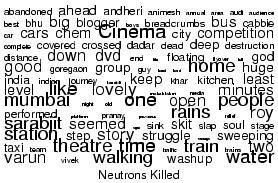
A word cloud for my blog. (Get it at www.snapshirt.com)

Saturday, March 11, 2006

The Back Flash - A Theatre Recount

(I spent four unforgettable eventful years at IT-BHU, and here's a brief recount of what the Theatre community and trends of the times did to me...)

January 11 2001. Chem Audi. IT-Open Skit Competition. ‘Chattaak’, sounded Pranay Arya’s heavyset palm on the round, big face of Nishant Verma, and the whole of Chem Audi erupted in applause and laughter. Pranay boomed, ‘Kameeni…aaj phir se gaajar ka halwa nahin banaaya??’ and Nishant Verma, playing his wife, hiding in that dramatically funny pallu, said – ‘Maaf kar dijiye…’

I know, I should’ve started from the start, but this slap, of all obscene things we have done on stage, stays in my memory for two reasons. One, it was a 2nd year guy slapping a 3rd year guy, playing his wife and the slap was so tight that Nishant could barely control his tears to perform the funny scene brewing on stage. The second reason, which is actually the reason why I am writing this article, is that the slap embodied what IT theatre stands for. It stands for originality, equality and spontaneity. Big words, all, and they will self-explain themselves once the story gets going. Hopefully. So, here is my journey in the magical world of IT-BHU theatre, and to give it a clichéd Hindi film tagline, let’s just say - a journey that changed my life.

August 1999 Limbdi Hostel - Curtain Opens

The usual rush of seniors had come into the hostel and all the fachhas were being fetched out of the rooms for another one of those darned ‘announcements’. But hey, this one was new! I had heard a lot about underground rock groups and all, and here they were talking about an Underground Pondy Skit Competition. No profs, no gals, just a ‘boy’s thing’. So, here you go. IT-BHU, the seat of education on the banks of Ganges, was hosting a ‘Chee-Chee Skit Competition’ to welcome the fachhas into the Theatre club! Our branch didn’t participate, because we were ‘good boys’, and the Mech guys, staying next door won it. They were happy, and we…well, we were morally one up.

P. S. – The Pondy thing got abolished next year onwards…thanks to us ‘Good Boys’! Now, we had a Fresher’s Skit Competition, where girls, profs and morals all participated.

September 1999 Limbdi Hostel – Act 1

Not participating in the first one, we had no option but to face the wrath of the organizer, Theatre Club Secy. Abhijeet Mukherjee. His assistant was a guy called Lalu (nicknamed, I am sure, probably because he mimicked Lalu well) and he also challenged us to participate in the upcoming IT Open Expressions competition. This time, fired by the scolding, our branch took the plunge and struck gold. The event was held at BBC, under the lights, with no proper stage, and a boundary made of chappals. (One of my branch-mates lost his chappals in the event aftermath, and never returned to theatre. Thankfully.) Audience count was somewhere between 100 and 200, depending on who was performing. I knew, this was not the best way to hold such events, but the better part was – the quality of performances.

P.S. – I performed two more times at the BBC, once for Annual Mono-act and again for next year’s expressions. That was the last time, when a Theatre event (other than Nukkad Naatak) was held there.

February 2000 Chem Department 1st Floor – Under the blue skies

The big names of IT Theatre, Abhishek Chandra and Vivek Roy were performing in Sparsh (The Annual Cult-fest, now Kashiyatra) Mono-acting Competition and I, more out of ambition rather than talent, registered myself for the same. A slightly chilly February morning, another stalwart Animesh Hazra as the host and my only foolish admirer, Sanchit Agarwal (batch-mate) by my side, I entered another kind of open-air venue. Again, no stage, no audience-seating arrangements and this time, no audience even! But seeing Chandra and Roy perform, it seemed they didn’t care. Their show was breathtaking, mind boggling and had they performed before me, I would never have performed. Another reality of IT-Theatre of the times hit me. Amazing talent, but where’s the junta?

P.S. – We never performed again on that cold, uneven floor of Chem. Deptt. and that was surely a sign of good times ahead.

January 2001 Various Hostels – The Rising

Suddenly, the winds had changed the direction, and as we entered the second sem of our second year, a huge crop of theatre enthusiasts (actually, rival groups) turned ripe. The rival groups, *cough* *cough* were led by Vivek Roy (3rd Tronics) and his chemical boys on one side and Pradeep Singh (4th Meta) and an assorted cast on the other. The poaching for girl actors had already begun in the first semester and verbal volleys (in the most civilized manners) had been exchanged. I, primarily being a writer (and a non-aligned dumber), chose to work with all the groups available. The stage was set for the annual IT-Open Skit Competition, and a phenomenal number of teams (12, for the record) turned up for the participation. I anchored the evening (and it was some evening, with Chem. Audi bubbling with junta) and in the end, Vivek Roy and Sidhharth Dubey’s ‘Aaj ki Taaza Khabar’ uprooted Pradeep, Pranay, Animesh and Nishant’s slap-stick ‘Sazaa-e-Maut’ stood second. (The slap in Sazaa-e-Maut was not planned as lethal as it turned out to be, and that got one of the biggest applause we had ever seen) It was a memorable day for me as (Modesty steps aside!) I was involved in the scripts of the top 4 skits in the event. The Theatre secy. for the year, Abhishek Chandra, an excellent actor himself, was too busy in organization to perform. But the big plus was, his efforts were showing results, and with the above mentioned rivalry coming to the front, theatre in IT was in for some upswing tide.

P.S. – My non-alignment ended with this event, and I became a full-time member of Pradeep gang, which was poised to become ‘GAP’ (Grover-Arya-Pathak) the following year. Hardly innovative, I know.

October 2001 M. Sengupta Auditorium (erstwhile G-11) – The Realization

The great rivalry continued into the next year, my third at IT-BHU. Annual IT-Open Skit was around the corner, and once again, poaching was on big time. Our team had lots of fresh blood in Sushant (1st Cera), Kesarwani (2nd Meta) and Ajay Saxena (2nd CSc). Roy and group had a gem in Amitanshu (3rd Trical), who could write and compose music, and act like pros too. And then, they had the writing-acting talents of Siddhu and Roy himself. Some other good teams, like the 1st year Chem group and 1st Meta guys were also in the reckoning. Our experimental take on Human Bombs, ‘Antaragni’ was well received by a house-full junta but Roy’s ‘Jhanda Ooncha Rahe Humara’, with its patriotic flavor was invincible. We stood second, but the biggest positive for us was – we were no more the underdogs.

P.S. – That day, the applause was loudest, and sweetest. I still don’t know why.

March 2002 G-11 – Play it on

The decision was taken soon after that skit – we were going to make a grand play on a scale IT had never seen before. Lots of team meetings followed and seniors like Nishant Verma, enthusiasts like Keerty (2nd CSc), Jyoti (2nd Civil), Raman (2nd Civil) and musicians like Amitanshu were roped in. We wrote it together - the story of a school kid, who is about to die of cancer and wants to do one final project that would change the lives of many around him and on the streets. It was called ‘Kunal’, and the guy who played ‘Kunal’ deserves a special mention. Mayank Mittal (4th Chem) was the most deceptive actors you would ever see, ‘cos he could surprise you with his range, spontaneity and intelligence. A few wet eyes in the audience, at the end of it, were our reward and acknowledgement.

P.S. – It was after making ‘Kunal’, the idea struck me. “Why not do it for the rest of your life?”

April 2002 FOPA Auditorium – A step ahead

That’s what they say in Sport, stay a step ahead of your opposition. And though, it can’t be proved entirely, Vivek Roy’s grand production ‘Ghat ki Tulsi’ (story of 4 prostitutes inside a brothel) had that element of stubborn counter-attack, which is hard to find without an intended ‘target’ group like ours. The ambition, performances (esp. 3rd Tronics girl Anita Reddy’s), and the following praise were sky-high and IT Theatre had taken a big leap forward.

P.S. – Since it was performed outside IT-BHU, at FOPA audi, the publicity for the event was highly targeted and innovative. It used paintings, portraits, poems and even installments to drive home the point.

Session 2002-2003 Various Places – The Sleepy Grand Finale

Coming into the 4th year, everybody suddenly became more responsible which, in the hindsight, was a bad thing to do. Animesh Pathak took over as Gymkhana Gen. Secy and cleaned up the poli-mess it was in. Pranay Arya steadied the Kashiyatra boat just before its sinking and made sure that event was held in all its dignity. And myself, *sigh* got involved with the University Youth Fest team, in the process, getting a huge opportunity to work with wonderful new talents like Sushant, Subhash, Ruchika, Mahak, and Surbhi. And yes, our production group G.A.P. was abolished. Roy left the campus and his protégé, Sidhhu, with some great help from Harpreet, Anita Reddy and a host of newcomers like Ritu Bajpai and Sumit Saxena produced another stunner in ‘Hello Zindagi’, this time performing at Nagari Natak Mandli in the town. So, in our own ways – the batons had been passed.

Epilogue

Looking back is never easy, because the rear-view mirror is foggy with emotional prejudices at times, and I hope, I have not crossed the line anywhere. Faces, names, places, events, even missing chappals, all were part of the IT-Theatre I knew. The theatre, which started at BBC, under flood-lights, and finished at National Youth Fests and Nagari Natak Mandlis. It transformed us, and for our own good, we transformed it. And amidst all these rivalries, paybacks and (occasional) politics, only static was the originality of thought and execution. I hear some good things about the current lot, Abhivyakti, and now Kshitiz are huge leaps forward, and I can’t help but finish with these lines by Sahir Ludhianvi: Kal aur aayenge, naghmon ki khilti kaliyaan chun-ne waale…Mujhse behtar kahne waale, tumse behtar sun-ne waale…!


Sunday, December 11, 2005

When...

(I recently wrote a song for VH1 Songwriting Contest but then realized that it has a submission fees of some 30 USD, so here I am, with my song for free...!)

When was the last time, you met the God,
When was the last time, you smiled odd.

When was the last time, you had a cake,
While watching on the TV, an earthquake?
When was the last time, you met the God….
When was the last time, you were in a mall,
And a car bomb outside, killed one and all.

When was the last time, you picked up the pieces,
Hoping it’s not your baby, but just a doll…
Tell me, when was the last time, you were in a mall…

When was the last time, you met the God.

When was the last time, you felt insane,
Ohh…so insane…
That you wondered how could you come this far,

Without meeting God once, or anybody who believed…
Without getting blown away, or blowing the ‘in grieved’,
Without any purpose, hidden or odd,
When was the last time, you met the God!!

Wednesday, September 07, 2005

Sarabjit and his DVD

Let’s thank Sarabjit. And why only thank, let’s hail him. He crossed the border, he got caught in an ‘Intelligence conspiracy’ (Indian or Pakistani, just don’t ask!), he was sentenced to death, he arose once again and with him arose Indian authorities, he is being discussed at bureaucratic level, and he got me my first DVD player. A latest SONY model, market price - Rupees 4000 plus taxes. Thank you Sarabjit. And while we are at it, Thank you Star News/ Zee News/ Aaj Tak/ Sahara Samay/ et al.

Two trends disturb me. One – the desperate (moral or immoral, you decide) limits to which the TV news channels are going to attract the eyeballs and two – the ‘success’ of such formulas. Case in point is Sarabjit Singh, who has been languishing in a Pakistani Jail for years on the charges of spying and now his family’s cry for help has been resonating across the Indian media. In an effort to make interactivity a tool for longer durations of viewership, the channels had started flashing SMSes of ‘concerned’ citizens over matters of ‘National interest’ (Sunjay-Karisma feud being one!). But then, that formula just gave them a first hand idea of viewership rather than increasing it. So the ‘logical’ next step was – offer them prizes for SMSing long and hard, and frequently. Your message will be flashed along with your name is just an added incentive, a byproduct. And that’s when many people across the country got their first DVD player (“A latest SONY Model, Market Price Rupees 4000”, Zee News-waali reiterated) for SMSing to save Sarabjit.

What’s wrong in that, many would say. It’s a business, and they are not distorting or influencing opinions, they are just asking for them. People have opinions and the channels are just giving them another reason to voice it out loud. But the bigger question is, and it must be asked, at whose cost? Isn’t it an infringement of emotions of all the people who really care for Sarabjit? Isn’t it a mockery of all the Indians who really want to SMS their support on TV but fear being bracketed with DVD-hungry percentage? And I am sure, this percentage is very less, maybe 2 percent. But for News Channel Statistics, this 2 percent is the vital increase in viewership.

And my reservations are not purely about moralistic issues involved. They are as much about the rights of a citizen in a democracy. When news Channels use this basic ‘loop-hole’ called ‘freedom of expression’ to make anybody (known or unknown personality) a subject of their daily poll, they forget that the same rule applies to the concerned person also. He might not want to become a media football without any referees. And it is worse when the subject is somebody as helpless as Sarabjit is right now.

The second disturbing trend, as I said earlier, is the ‘success’ of such formulas. I say success, because the trend has been catching up and now you get a prize on every News Channel for SMSing your views on the story of the day. You can win a TV for predicting the result of India’s next match, a refrigerator for taking sides with Left on petrol prices, a 100 CC bike for naming the father of Amir’s alleged son, and (what else) a DVD player for telling the Indian Government to get Sarabjit back. What next? A home theatre for predicting whether Sarabjit will be returned or die in Pakistan! A luxury car for predicting his last words!

There was a time when ‘Bollywood’ was considered a place for stupid, where any hit film would kick-off a trend but seeing the presumably well-educated (dare I say intellectuals) Electronic Journos behaving like red-bottom apes, I guess the ‘chakra’ has shifted. And now, it’s not about saving our ‘4th Estate’ from the clutches of commercialization, it’s simply about saving ourselves from the Estate’s multitudinous sins.